Tuesday, November 20, 2018

Come Sit With Me

Second Retreat Weekend

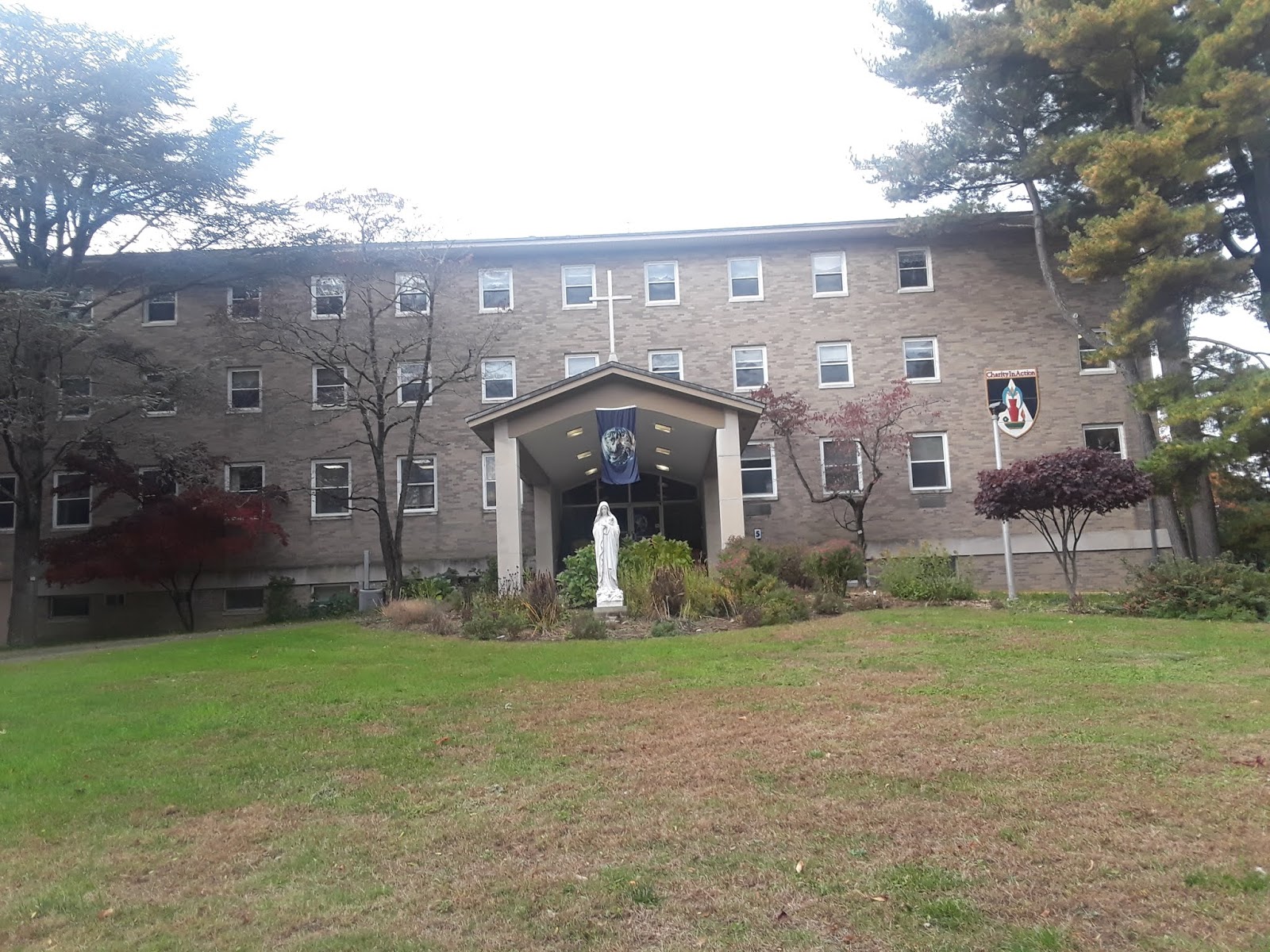
Mariandale Contemplative Formation


 Each weekend we have a theme or two. This weekend was "The Bench." We were all to imagine a bench in our lives. A place to sit and contemplate; a place to look deeply at the real.  You can sit on the bench and watch the sunrise or sunset, you can look at the wonders of nature, you can watch and love your fellows made in God's image, you can read a book, meditate, and/or pray.
                      
The reason it's a bench and not a chair is you need space to invite others to join you. The contemplative life does not have to be a lonely one, you need a bench to share God's gifts with others. To just spend a little time together with someone you love. I've included a photo of my favorite Mariandale bench. I'd love to share it with you sometime.

This weekend was a couple of weeks ago, and the fall colors added to the joy of the experience. We have plenty of things to learn about, but we also have plenty of time to enjoy the beauty of where we are, and since it's usually done in silence, there's little to distract you from the simple act of watching and contemplating. The material we discuss is sometimes loaded with details that can be overwhelming, but you have the time to absorb and digest what you've been given. This is an experience that fills me with bliss.


I always pick particular socks for the weekend. This time, people obviously noticed. One of the facilitators gave my ankle a light kick when she saw my Jesus Socks. Another brought them up at our dinner Saturday when we were allowed to talk. Positive feedback from all.

We continue to discuss various techniques, such as Lectio (and Visio) Divina. Lectio is done by reading a passage of scripture and listening for the impact, asking what it means, asking what God is saying to me, praying for God's guidance on how to respond, and then committing to a personal response. Visio, which I've never heard of before, is a similar practice, but using a painting instead of or along with the scripture. We had a lengthy discussion about the story of Mary's encounter with Elizabeth when they are pregnant with Jesus and John the Baptist. I've enclosed the painting we used. There was much talk about how Mary and Elizabeth's embrace was strictly feminine, yet I think I could see the Prodigal Son and his father in a similar posture.

I know being contemplative is not for everyone, although I find myself sharing with anyone who will listen. I'm thankful the program allows me to meet and get to know twenty-four other people who are as inspired by it as I am. Contemplation is frequently depicted as a solitary state, and there was a time when desert monks went off into the wilderness to be alone with God, but two of the greatest mystics, Brother Lawrence and Thomas Merton kept up long and loving correspondences with others. Thomas Merton traveled the world to share God's message.

I read a book by a Quaker many years ago who loved meditation because you could do it with anyone, no matter what their faith, because it was a silent sharing of worship, each with their own thoughts/prayers. I think the shared silence and meditations among the group is similar. Janet, one the facilitators emphasized early on that we are each on our own journey, together yet still separate. Friendships may result, but that is not the object of the program.

I am not doing this just to have a closer personal relationship with God. I am doing this to be a better person, to be closer to others. I want to love in a more selfless way and to understand to what work God has called me to. We are called to love God and to love others as ourselves. Jesus said if we do that, we have met our obligation to God. Her love for us is so great, and She wants us to love her back.

Due to renovations to the living quarters at Mariandale, our next retreat weekend won't be until April. It is a challenge to maintain my practices for the next five months, but I will be checking in with my Spiritual Director Jeanine and meeting with my small group for a couple of hours monthly. I pray that will be enough to keep me growing. I'll let you know.


Monday, November 5, 2018

We Meet in Small Groups


By Choosing Contemplation You Choose to be Marginalized

I had my first small group meeting (held monthly; in between retreat weekends) on November 1st: our facilitator, Janet, passed out a sheet to us about what Contemplation is, and what it is not. Taken all at once, it seemed daunting, yet I'm sure that I'm in the right place, doing the right thing. The statement I'm using as my headline is from that sheet, and I find it the most daunting of all.

What does it mean, "to be marginalized"? I said at the meeting that after the first weekend retreat, I felt like Michael Palin at the end of the travel documentary, Around the World in 80 Days. He's sitting on the London tube and thinking to himself, "I've just been around the world in 80 days, and none of these people know it." He's ready to burst with the excitement of his accomplishment, but he also knows that few people, if anyone, on the train would care.

I am so excited by this program, feel so blessed, that I find myself talking about it to everyone I can. Most people's eyes start to glaze over after a couple of sentences. But one woman, who overheard my conversation at my church's thrift shop, was as excited as I was about what I was saying. She said, "You're right, you open yourself up to God, and your life will be changed in ways you can't foresee." She parted by offering me God's blessings.

My spiritual director, Jeanine, was also encouraging, saying she was glad to hear that I was evangelizing my experience, "Sharing the Good News." This is not something I have been comfortable with in the past. Episcopalians, in general, shiver a little bit when you talk about evangelizing, "That's something those other Christians do. We Episcopalians are too polite for that. If we have a good thing, people will know, and come join us." The question is, How will they know, if we won't talk about it?

But I also feel like Scrooge, as played by Alistair Sim, at the end of the movie when he says, "I don't deserve to be so happy. I can't help it. I just can't help it." The rightness of this experience, and the incredible excitement it is generating in me, make sharing it almost beyond my control. I just have to get used to people not being as interested in it as I am.

The glorious thing about the program is that there are twenty other people going through the same experience I am, so at least I can talk to them about it. In our small group meeting, we shared our experiences after the first weekend, and once again I found myself surrounded by thoughtful, supportive, and innovative thinkers. Brother David, who lives about two blocks from me in the Bronx and gave me a ride home from the first weekend, is also in my small group, so that was a special bonus.

And this coming weekend is Retreat Weekend #2 (of five). My journey to somewhere will continue. I hope it will continue to excite. Once I am re-energized, I will have even more to share with you as your eyelids flutter! Even if no one reads this blog, I feel it is helping me in the process.

So if you're out there, wish me well!

Wednesday, October 3, 2018

First Mariandale Weekend: So you want to be a Contemplative

I attended my first retreat weekend as part of the Contemplative Formation Program from Friday evening, September 28th, to Sunday afternoon, September 30th. There were 20 of us plus five facilitators.

The schedule went as follows: Friday, check in at 5:00 pm, dinner with conversation at 6:00, presentation at 7:00 followed by small groups to discuss, closing prayer at about 9:00 followed by silence through the night. Saturday, we had optional group meditation at 7:00 am, optional morning prayer at 7:30, silent breakfast at 8:00, presentation and small groups at 9:00, silent lunch at 12:15 followed by silent personal/integration time until 3:15 when we had our afternoon presentation and small groups, more silent personal/integration time at 5:00, dinner with conversation at 6:00, evening presentation and small groups at 7:00 pm, followed by evening prayer and silence beginning about 9:30 through the night. Sunday, we had optional group meditation at 7:00 am, optional liturgy with eucharist at 7:30, silent breakfast at 8:00, morning gathering and small groups at 9:00, closing prayer at 11:45, lunch with conversation at noon, and then home.

So quite a bit of time spent in silence. I took part in everything except the 7:00 am meditation. Saturday I woke up too late, and Sunday I spent that time gazing at the Hudson river. In fact any free time during the day I spent gazing at the Hudson.
 My overall impression was, "Wow, this is going to be wonderful, potentially life-changing." The facilitators and the participants all seemed wonderful. Everyone was incredibly honest, thoughtful, supportive, and insightful. Any doubts I might have had were chased away by the feeling that we were all there, imperfect, trying to find our way, and willing to pray for and help everyone else in any way we could. The periods of silence felt a little awkward at first, but at the end I said to one of the others, "I kind of want to hold on to the silence for as long as I can," and he said, "Me, too."

In our sharing sessions, I never knew what was going to come up when I began talking. Once I was close to tears as I remembered a very difficult time when Mary was in the hospital and our cat Ray was suffering from kidney failure. At another session, I remembered an encounter from a couple of years ago that I hadn't thought about for a long time. One of the lessons for me is that you never know where God is going to lead you, you never even really know if She's paying attention, but you know She loves you and is with you all the time, and you trust in that.

Extra bonuses, the food is very good (particularly the fresh salad ingredients and the desserts), and two of the people in the program are Marist brothers who live in the Bronx, about two blocks from me. One of them gave me a ride home, cutting about 60% off of my commuting time! And I only found out that he was from my neighborhood when I had lunch with him on the final day.

My final group session was with just the men in the program, and the facilitator said that this would be the case for every weekend, because "men's spirituality is different from women's." I don't think I agree with that, but I've got no problem meeting in an all men's group once a weekend. Any thoughts on how men's spirituality would be different from women's spirituality?

I also realized by the end of the week that the program's goal is to help me become a "Contemplative," which despite the name of the program was a surprise to me. I hoped to deepen my personal spirituality, but I didn't think my purpose was to become a Contemplative (kind of a Mystic, second class), per se. But now that I think of it, I'm okay with that, in fact I'm excited about that. This is such a wonderful opportunity! Thank you, Sr. Maureen, for recommending this to me!
I'm ending with a picture of this little statue I found near the Sisters' graveyard. I'm not quite sure who she is, but I was immediately fond of her. Sometimes you can just enjoy the mystery.

Monday, September 24, 2018

Time to Say Yes

Four R's of Centering Prayer
Resist no thought
Retain no thought
React emotionally to no thought
Return ever so gently to sacred word

It has been a long month in the Bronx. After being accepted into the Contemplative Formation Program, I was excited and ready to begin! Four long weeks later, I'm still excited and ready to begin, but I was starting to feel that this day would never come.

This coming weekend will be the first of the five contemplative weekends I will be spending over the next nine months.  I have been preparing, but until recently have been uncertain about exactly what I should be doing or what was to come. This past Saturday was an orientation meeting involving three of the facilitators and ten of my fellow pilgrims on this journey.

As they came into the room, it became clear that we shared some characteristics: all white, all in our 40s or older. There were four men and nine women. As we talked about our personal spiritual practices, I realized that most of the people's practices were from a little to a lot "out there" compared to my traditional morning prayer, evening prayer, centering prayer. I began to think, "What am I doing here? Have I made a mistake?"

Fortunately, I had immediate and complete faith in the facilitators (one of whom had been my primary contact as I got through the application process), so I didn't make a bolt for the door. As the day passed, I realized that while we are traveling together, we are all on our own separate, individual journeys. Our obligation to the other pilgrims is to pray for each other and to encourage each other. I had a little practice doing that on Saturday, and I can certainly continue to do that. I also remember my recent session with my spiritual director, Jeanine.

I had wondered why Jeanine had scheduled my second monthly conference before the  program began. What new did we have to talk about? I assumed that a call after the first weekend would be more productive, but as the conversation progressed, I realized that Jeanine was preparing me with the goal of my getting the most out of the coming weekend that I could. We talked about how I should not be skeptical, but ready to say "yes" to any opportunity to grow. I should feel free to give myself as fully as I can to the experience.

Which reminded me of an incident long ago in college, when a friend tried to guide me through self-hypnosis, with the object of providing me with better concentration and less stress in my academic life. As she was guiding me through the process, my eyes were closed, my hand was half-raised, and then she suggested to me that I was unable to put my hand down. I promptly put my hand down. Surprised, she guided me out of whatever stage I was in and asked me what had happened. I said that when she suggested I couldn't move my hand, I thought to myself, "She's wrong, I can move my hand." She responded, "Noooo! You can't say 'no!' That way nothing happens. You have to say 'yes'!"

I wasn't ready to say "yes" back then. Now, however, if I want to get the most out of this program, I must say "yes." I must give myself freely to the experience and not prejudge. I mustn't set goals, for that will throw me off when I don't achieve them. I don't know what's going to happen inside me, it's a mystery. But I think whatever does happen will be progress, perhaps life-changing progress, so I shall do my best to ride the wave and say "yes."

A rabbi came to speak to us at Maryknoll once, and he referenced a sign by the road that he'd seen as he was driving up that morning: "God answers prayers." He said, "God does answer prayers! But the answers may not be what we thought they would be." But whatever God's answer is, we need to accept it and learn from it. We need to follow wherever God leads, because Her (I prefer the feminine--maybe I'm a little "out there" myself) wish for us is good. God loves us, and as long as I remember that,  it doesn't matter where the road takes me.

So as the first weekend looms in the near future, I am excited to begin. How will I feel next Monday? I can't predict, but I imagine I will be farther along the road toward that horizon where God waits for me.

Thursday, August 23, 2018

Contemplative Formation: The Journey Begins


This all started with a lunch date I had with a friend/coworker (Karen). The days before we met, I found myself thinking, "Ask her about spiritual direction." But I couldn't figure out why I would ask her in particular. When I did, Karen responded, "Funny you should ask. I was just speaking to a Maryknoll Sister who wants to do more spiritual direction." I met with Sister Maureen, who discovered she was too busy to work with someone new just now, but she strongly recommended the Contemplative Formation Program at Mariandale to me (see info here). Five weekends of silence and prayer scattered over eight months, each followed by a meeting with fellow participants after each weekend. I was instantly interested. It sounded like something I had wanted to try for a long, long time. When I heard how expensive it was, I figured it was impossible, but Sister Maureen said, "They have financial aid. Ask them about it." I thought, "Perhaps God is pointing me this way."

I contacted Janet, the woman in charge of the program, and she said they would probably be able to help me with most of the cost and told me to go ahead and apply. The application process was more involved than any other seminar, course or program I have signed up for. I had to write reflections on my personal spiritual life, what interested me about the program, and what I hoped to get out of it. I had to supply two personal references (fortunately, I got two beautiful ones from my priest and from my dear friend and mentor, former lay missioner Jean Walsh). Then I had to go to Mariandale for an interview with two of the people who run the program. After the interview, I felt good, but uncertain. How many people were applying? Did they have to turn some people away? I didn't know.

At the interview, they told me I needed to get a spiritual director (circling back to my lunch with Karen). I went online to see if there were local spiritual directors I could hook up with, but the websites were woefully out of date (directors had moved, some had even passed away). My first thought had been another former lay missioner, Jeanine Boucher-Colbert. I had seen on Facebook that she had received her spiritual direction credentials. She was in one of my first classes of missioners at Maryknoll, and I respected and remembered her fondly, but we hadn't spoken in years. It was a treat just to get in touch with her. She agreed to take me on, and we had a first session (all done by phone, since she lives on the West Coast). I was very happy with our first session, so I hope to continue to get her direction as I go through the program (and perhaps beyond). Years ago, it would have cost me a fortune to talk long-distance for an hour. Thanks, modern technology!

In between setting up the appointment with Jeanine and having our first call, I got the news that I had been accepted into the program! I am excited and looking forward to the process. It's taken me three months to get to this point, and it's another month to the first weekend, but I'm sure it will be worth the wait. I can prepare for what I hope will be a very rewarding experience.

Mary has been very positive all along, and I couldn't do this without her support. I'm taking off days before and after each weekend to make up any time with her. She deserves as much love and attention as I can give her.

I will be keeping you posted as this goes along. If you have any comments, suggestions or wisdom to share, please pass them on to me. I've learned that God chooses any number of ways to speak to me, and I can use your help in listening.

Monday, March 5, 2018

I Will Remember Larry


                My dear friend and priest passed away this past week.  I first met Fr. Larry LeSeure when I came to St. Stephen’s Woodlawn to do a Mystery Worship. Mystery Worshipping is sort of reviewing churches as if they were restaurants, primarily interested in seeing how they welcome strangers. I had been an atheist/agnostic for 30+ years, and now that I was returning to church, I was using the Mystery Worship process to look for a spiritual home.
                I remember shaking Larry’s hand as I was leaving, and he directed me to sign the visitor’s book. I had left the Mystery Worship ticket in the collection.
This was soon after 9/11, and apparently the ticket had inspired a bit of a panic when the collection was counted. Fortunately, Larry had been Mystery-Worshipped before and explained to the people who discovered it what the ticket meant. I received a beautiful hand-written card from his soon after where he wrote, “Were you the Mystery Worshipper? If so, please be kind.” He also encouraged me to return.
                I had been favorably impressed with St. Stephen’s (and Larry) {see review at http://ship-of-fools.com/mystery/2001/425Mystery.html}, so I started coming to church there every few weeks. I found Larry’s sermons theologically challenging, but what I was most impressed with was his handling of the liturgy. Episcopal priests do the same liturgy basically week after week for years and years. Larry was nearing retirement, so he must have had most of the text memorized by this point. But as I watched and listened to him it felt as if he was living each moment as it happened, ever fresh and new.  I spoke to him about it, and he explained it by admitting that he was constantly praying as he was going through the service. It’s a rare gift to be so involved, I think. I have seen dozens of priests over the years, and Larry gave me the feeling of newness more than anyone else.
                I had been baptized Episcopalian, but raised in a non-doctrinal church. So when the time came to become a member of St. Stephen’s, Larry was excited that I had never been confirmed. He gave me confirmation classes, and answered my many questions about the Episcopal church. The more I learned, the more I grew to love the church. At one point I called him, and I said I wanted to do more for the church (thinking of volunteering in some way). He told me he wanted me to help at the altar. This is not what I had in mind, but I couldn’t turn him down. I soon discovered that assisting him was particularly fulfilling to my growing faith. There was something about being personally involved in the service that made it even more meaningful. I have found other ways to do the work for the church I was interested in, but I remain helping at the altar and am thankful to Larry for inviting me there in the first place.
                He also was a good friend to my partner Mary and me. When he lived in the rectory, he invited us over for dinner a few times. The furnishings reflected his religious feelings, and he had a piano which he would play for us. Mary said she wished he would adopt us, so we could live there with him. We returned the favor by taking him out to lunch a number of times, and the conversations were always fascinating. When he retired from St. Stephen’s, he happened to move into the apartment building next to mine, so we have been able to keep in touch.
                Last year, my 20-year-old car died, and I haven’t been able to replace it. He immediately volunteered to lend me his car when I needed it. I wasn’t sure if I should accept, but he said to me, “But I want to help!” His generosity and friendship have meant much to me than I would have ever expected when I walked into St. Stephen’s to review it all those years ago. I saw him last about two weeks ago. He has struggled with his health the last few years, but the last couple of times I saw him, he was feeling very well and energetic. We talked about how the three of us (Larry, Mary and I) should go out for dinner soon.  I was shocked to learn on Sunday of his passing, but I know God has welcomed him and that he suffers no longer. I hope I am blessed to see him when I join him on this journey.

Monday, September 18, 2017

A Mishmash of Liturgies

I do three prayers a day normally: morning, evening and compline. Over time I have developed distinct and contradictory preferences in my solitary worship. I presume they don’t make any sense to anyone other than me and God, and the only reason I count God is that She is all-knowing.  That’s one of my preferences, if you hadn’t guessed. I try to refer to God as neutral or female. At times I would wonder if I was being blasphemous, but then I read about a Saint (exactly which one I can’t remember) that was noted for always referring to God in the feminine.  If you can achieve Sainthood and maintain that behavior, I’m not going to worry about my little transgression.

In my humble opinion, God is really without gender, but has been referred to in the masculine by countless millions (billions?) for so long that I believe if I use the neutral it will not balance the majority references, so I feel better using the female gender whenever possible.

Other habits include referring to the Holy Spirit as the Holy Ghost.  It’s my understanding that until recently Ghost was preferred to Spirit, but somewhere along the line Ghost got associated with spooks and goblins, and the Spirit was considered  less likely to be associated with Halloween.  Still I see Ghost used in my Rite 1 section of the Book of Common Prayer, so to be contentious perhaps, I like using Ghost.

I used to have the Order of St. Helena’s Psalm Book, and they try to use neutral language at all times.  Instead of:

Glory to the Father, and to the Son, and to the Holy Spirit:
as it was in the beginning, is now, and will be for ever. Amen.

They write and say:

Glory to God, Source of all Being, Incarnate Word and Holy Spirit; as it was in the beginning, is now, and will be for ever. Amen.

I say the same, except I say Holy Ghost.  I like the rhythm of it better than the more traditional wording, and of course it’s gender neutral. Another thing I enjoy doing is using different translations of the Bible for the readings. I grew up on the King James Version, which I believe has some of the most beautiful language of any Bible in English, but sometimes it is a bit difficult to understand.  I used Eugene Peterson’s The Message for awhile.  It has understandable language, and it can be quite surprising and dynamic.  But I like to mix things up a bit (obviously), so have started using the different versions authorized by the Episcopal Church.  One of my latest favorites is the Good News Version, and I even ordered a copy of it, so I can refer to it when I don’t have access to the internet.  I love it; it reminds me of the Bibles I knew in my childhood with all the illustrations.  Some are in color and “starving artists sale” style, and most are just sketches within the text.

Finally, I prefer the modern version of the “Our Father [Mother]” to the traditional.  My experience in worship settings seems to indicate that I am almost alone in this.  I have read a number of articles, however, on how the modern “Save us from the time of trial” is closer to the original text than the traditional “and lead us not into temptation.”  Recently I remembered that I must have grown up with the modern text because I remember being puzzled by “transgressions” as opposed to “sins,” when I started going to Episcopal church services about 25 years ago. So I feel even more comfortable using the modern version since that realization.  In fact I find myself saying “Save us from the time of trial” at this point even when saying the traditional “Our Father” in church.

So what’s the point of this particular blog? I guess that when we worship in isolation, we find ourselves doing all sorts of things that we wouldn’t do within the walls of a church.  It makes me realize how people who are “spiritual, not religious” can end up astray and self-centered, when I think God calls us to be outward-focused. I won’t begrudge myself my idiosyncrasies, but I will maintain my weekly church attendance: Both to be among others and also to keep me grounded in the Episcopal liturgy, not my cockeyed version of it.

Thursday, August 24, 2017

Dressing for Protest

I am known around work for my fashion sense. I have a penchant for wild ties and socks.
Here you can see me wearing my coffee tie.  I bring this subject up, because a friend who had earlier complimented me on my taste in clothing--she said I would do particularly well in Cambodia, where the people love clashing colors--recently told me she had been thinking and felt that I was actually engaging in some sort of "punk protest" by dressing the way I do.

I wasn't sure how to take that; I hadn't thought of it that way before. If anything, I thought of it as a flowering of my inner self, more willing to wear wild work clothes because I enjoyed them. When I look back at previous jobs, I worked for a long time at a business publisher, and I remember I was the only man who didn't wear a tie to work. I did that, I think, because I was an editor who rarely met authors face-to-face, and didn't feel it was necessary to wear a tie. I also didn't enjoy wearing one, so as long as I could get away without, I would go tieless. My next job was a brief stint as a teacher, and I remember the principal telling me that he wanted male teachers to wear ties and suit jackets, because he felt it was a symbol of respect for the important work they do. I didn't have a choice on what I wore, but I respected his telling me why, and I agreed with him that teaching is a very important job.

Now I come to my current job, working for Maryknoll Lay Missioners, and I find myself as the only male wearing a tie. I feel that principal influenced me in deciding to wear a tie at work, because I think what we do at Maryknoll is very important, but I would wear wild ones, because I wanted to express my new love for colorful clothing. Below, I am sharing Ethiopian food with my thoughtful friend and wearing my Starry Night tie with my favorite purple shirt.
 Please note, I've received positive feedback from the people I work with for my ties and socks. Yet, I know I have a certain dislike for the corporate workplace, so perhaps my choice of ties and socks is a rebellion of sorts. In general, however, I don't think of Maryknoll as a corporate workplace. We are not motivated by making money, we are motivated to make a difference, guided by our Christian faith (let me add that all faiths are welcome to serve on staff). So while some things remain the same, there is always a different feeling about the workplace here than I experienced elsewhere.
Here above, you see me wearing my goose/duck tie while taking a lunch break with a friend and her son (pictured). So perhaps I am in constant rebellion against our money-driven society here in the U.S., where profit-making has done us more harm than good, in my oh-so-humble opinion. Most of my ties are gifts or purchased at my church's thrift shop, another way to avoid the commercial exploitation.

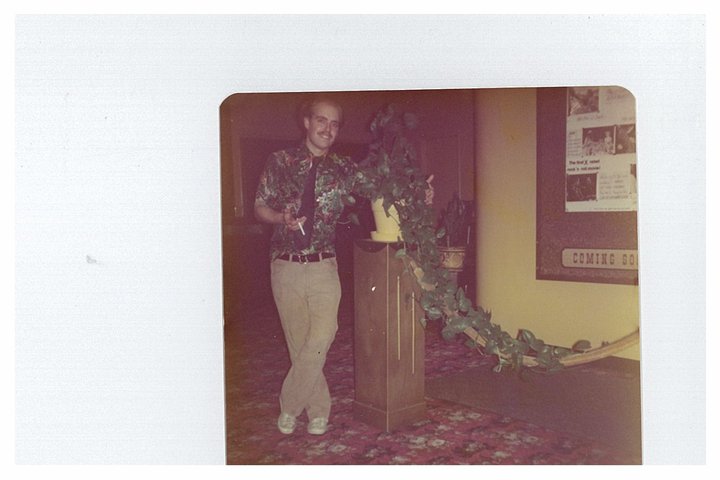
Perhaps my flair for clothing has gone on longer than I first thought. See above a picture of me in my struggling acting days, when I paid the rent by working at a adult movie theater selling popcorn and sodas to patrons.
And then there was that tux I wore at my senior prom. Whatever my motivation, I plan to continue wearing those ties and socks.

I almost forgot, I found a tie much to my taste this morning, abandoned, hanging from a doorknob. I guess God wants me to keep wearing these ties as well.


Thursday, August 3, 2017

Embrace Every Glowing Soul

My first job in New York City was as a waiter for a diner on Wall Street. My main duty was taking outgoing orders for the breakfast rush.  People would stand in line, tell me what they wanted, and I would prepare their coffee and call out orders to the kitchen, “Two eggs, scrambled, with bacon on a roll!” Then I would take their money and hand them their order in a paper bag.
I would see the same people every day, and I would have a chance to chat with them while waiting for their order to be filled. We became friends over time. One of these friends sold me tickets to a party on a cruise around Manhattan. I had only been in New York a few months, so the idea of partying while watching the City pass by appealed to me.
Over the course of the next few days, however, a number of my white coworkers came up to me to tell me that I should not go to this party, because everyone there would be black, and I would be in some sort of danger as the only white person there. I shook off the first couple of people, thinking they must be putting me on. Why would my friend sell me tickets if this were true? But as person after person came up to me with the same message, I became concerned.
I first came to New York when I was 25 years old. I had been living in a rural area north of Seattle, where my interactions with black people were few (there was one black person in my high school, whom I didn’t know personally). In college, I met more types of people, but I had never before been in the absolute minority of a large group. Being new to New York and big city life, I wasn’t sure if these very serious white people knew something I didn’t. I decided to ask Nancy, a black waitress who was going on the cruise, if I really had anything to worry about. She looked at me with disappointment and said, “Richard, I thought you were different.” I was ashamed and embarrassed. She assured me that I had nothing to worry about.
I told my date that most of the guests would be black, and she decided not to come because she felt uncomfortable. She did encourage me to go on my own, however. The night of the cruise, I ran into Nancy, whose date also had not come. We spent the whole cruise together. We sat on the deck watching the City go by, we danced, and we found the woman who had sold us the tickets. She had set up a table for her group with free food and drinks. Who could ask for more? I had a wonderful time on the cruise.
As I look back on this incident, I am still embarrassed, and I regret that I asked Nancy about my safety, but I think I can forgive myself. I believe our society and our history has encouraged the separation of, and suspicion between, people of different races. We have gone to extreme lengths to split people apart: Indian reservations, Japanese internment camps, and white-only drinking fountains, business establishments, schools and seating on buses.
I recall a passage from Genesis, where Joseph has invited his brothers to a banquet. The author makes a point of describing the seating arrangements:
“So they served Joseph at one table, his brothers at another table, and the Egyptians who ate with him at another table. This was because Egyptians did not like Hebrews and never ate with them.” Genesis 43:32 (NCV)
As I look at that scripture now, my reaction is: Those poor Egyptians, they really missed out on a good time! Think of all the interesting stories Joseph and his brothers could have told them, but they cut themselves off from what could have been a lovely party. Just as I almost cut myself off, because I was afraid that black people wouldn’t like having me at their party.
But what I’m talking about here is, of course, more serious than that. In the end, I think we really are cutting ourselves off from better, richer lives by separating ourselves. When I became active in the Episcopal Church, I joined the Diocesan Anti-Racism Committee. We meet monthly to plan activities, such as Anti-Racism training, the annual Jonathan Daniels pilgrimage and the Absalom Jones Celebration. We always share a meal, and the stories I’ve heard and the times we’ve spent together have definitely enriched my life.
Jesus was criticized by the Pharisees (and even by his own disciples) for the people he associated with, but he knew we are all children of God. Ignorance is a big factor in the rising tensions between different racial, religious and cultural groups in our country. It is much harder to hate people after you’ve broken bread with them.
In Anything We Love Can Be Saved, Alice Walker wrote: “Our last five minutes on earth are running out. We can spend those moments in meanness, exclusivity, and self-righteous disparagement of those who are different from us, or we can spend them consciously embracing every glowing soul who wanders within our reach.” I plan on embracing as many of  those glowing souls as I can in the time I have left.
Originally published in the Episcopal New Yorker

Friday, July 21, 2017

We Are Called


“We are called to love tenderly.
We are called to serve one another, to walk humbly with God.”—We Are Called, hymn by David Haas.
 My view of mission was initially shaped by stories of missionaries such as William Duncan and Marcus Whitman: The white man carrying his Bible into the wilderness, bringing salvation through the Word of God. I was very cynical about this type of mission.
Since I have worked for the Maryknoll Lay Missioners (MKLM), my view of mission has improved considerably.  The organization sends Catholic lay people—single adults, couples, and families with young children—to serve in Africa, Asia, and Latin America. Each year, MKLM missioners who have finished their first three-and-a-half-year contract return to our headquarters to reflect on their experiences before either renewing their contract or leaving MKLM.
For me, the best part of this process is hearing their stories of mission.  One missioner, Kim Fischer, who is serving in Brazil with her husband and three children, spoke about how they struggled to find mission work that really fit with their skills and abilities and was meaningful.  A Maryknoll priest in Brazil told her that it was not so important what they did in mission, but rather how they acted in all areas of their life: both there in their mission work and in their private life.  The example they are to others, the relationships they build with the people they serve; that is what really matters in mission work. Kim felt this advice had a profound impact on her, and it has helped direct her mission life.
Another member of this class, Richard Ross, who served in Tanzania, said he was frustrated in his attempts to learn the Kiswahili language.  He shared his feelings with another missioner, Erik Cambier, who had served in Tanzania years before.  Erik told him that he still could make an effective contribution in mission even if he never became fluent in Kiswahili. He said, “You possess the most powerful language of them all. You have the language of love, and that, my friend, overrides everything else.”
Richard spent his entire mission at one location: The Lubango Center in Nyashana. His job title was Maryknoll Lay Missioner Advisor, and he shared his job description with me. He had a lot of duties—but perhaps his two most important duties were to welcome students to the Center and to be a “blessing” for those who came to the Center.  He told us he joined MKLM because he wanted to spend as much time as possible playing with children. This did not seem like much of a mission, but he showed a video of his farewell from the Center. The children lifted him up and carried him like a baseball player who has hit the winning home run.
I asked Erik why he felt Richard had such an impact, and he explained that in Tanzanian culture, childcare is seen as strictly women’s work.  Men have little or nothing to do with their children after they’re born. Richard treated the children of the Center with love and attention, which made Richard a very special man indeed. Perhaps his example will affect the behavior of the male children he worked with when they grow older. Spreading God’s love is what mission is all about.
Janice Fuquay, a missioner I have known for many years, tells a story I find particularly memorable.  She is a veterinarian, and she worked with men and women in the border region of Peru and Bolivia. They were raising llamas and alpacas to supplement their incomes. She would hold regular gatherings where they would share their experiences and give each other advice on how to deal with problems that arose. Janice spoke of how eager she was to read their evaluations at the end of the sessions, looking forward to finding out how successful they were at raising the animals and how much more money they made. What she found, instead, were testimonies about how much better they felt about themselves as persons.  One woman spoke of how her husband had grown to value her opinions and was proud of her accomplishments.  Another man wrote of how people turned to him for the first time as a source of knowledge and wisdom. “Of course,” Janice thought, “That’s what it was all about! It’s not about raising more llamas and alpacas; it’s about making them feel better about themselves and each other.” Janice showed them that they were people who had knowledge and abilities to share. How she behaved toward them would have greater long-term impact on their lives than their success or failure at animal husbandry.
The Book of Common Prayer in the General Thanksgiving, spoken at Morning and Evening Prayer, includes the following, “We pray, give us such an awareness of your mercies, that with truly thankful hearts we may show forth your praise, not only with our lips, but in our lives, by giving up ourselves to your service. . .” Some missioners I know are doctors, lawyers, and engineers who provide desperately needed health care, who help with uncaring justice systems, and who build wells to bring fresh water. Yet Christ calls all of us to mission, no matter what talents we possess. You can’t always change people’s lives, but what you can do is be present with them, share God’s love and accompany them on their journey. That is mission, too.
Originally published in the Episcopal New Yorker.

Life-Changing Encounters

  I recently visited upstairs at Walsh, the building I work at currently. My office used to be on the second floor, but a few y...